If you’re on your own non-toxic journey, you likely want to make changes that benefit your whole family, especially your children. This is a smart choice, since limiting their exposure to toxins now can have lifelong health benefits. Babies and children are more sensitive to toxins due to their developing immune systems and smaller bodies, making it even more important to pay close attention to the ingredients and materials in the items they use everyday. They breathe faster, absorb more through thinner skin, and spend more time close to the floor where dust and chemicals can accumulate.
In this guide, our goal is simple: reduce exposure to the ingredients that don’t serve their health, choose better options in the products they use daily, and build a safer routine you can actually maintain. Consider this your beginner-friendly, Girls Who Eat-approved guide to non-toxic baby and kids essentials, from the most common ingredient red flags to what to look for in diapers, skincare, bedding, and more.
Quick note before we get into it: you don’t need to overhaul your nursery or bathroom cabinet all at once. Progress over perfection is the only strategy we’ve found that actually sticks, and swapping products as you run out is the easiest way to make changes without waste or stress. It’s also important not to feel guilty about products you used or decisions you made before you learned the importance of reading labels. We understand wanting to do everything just right for your children, so remember that every single change you make has a positive impact.
What We Will Cover
- Why Non-Toxic Baby + Kids Products Matter
- Most Common Toxins Found in Baby + Kids Products
- Bath + Skincare: What to Look For
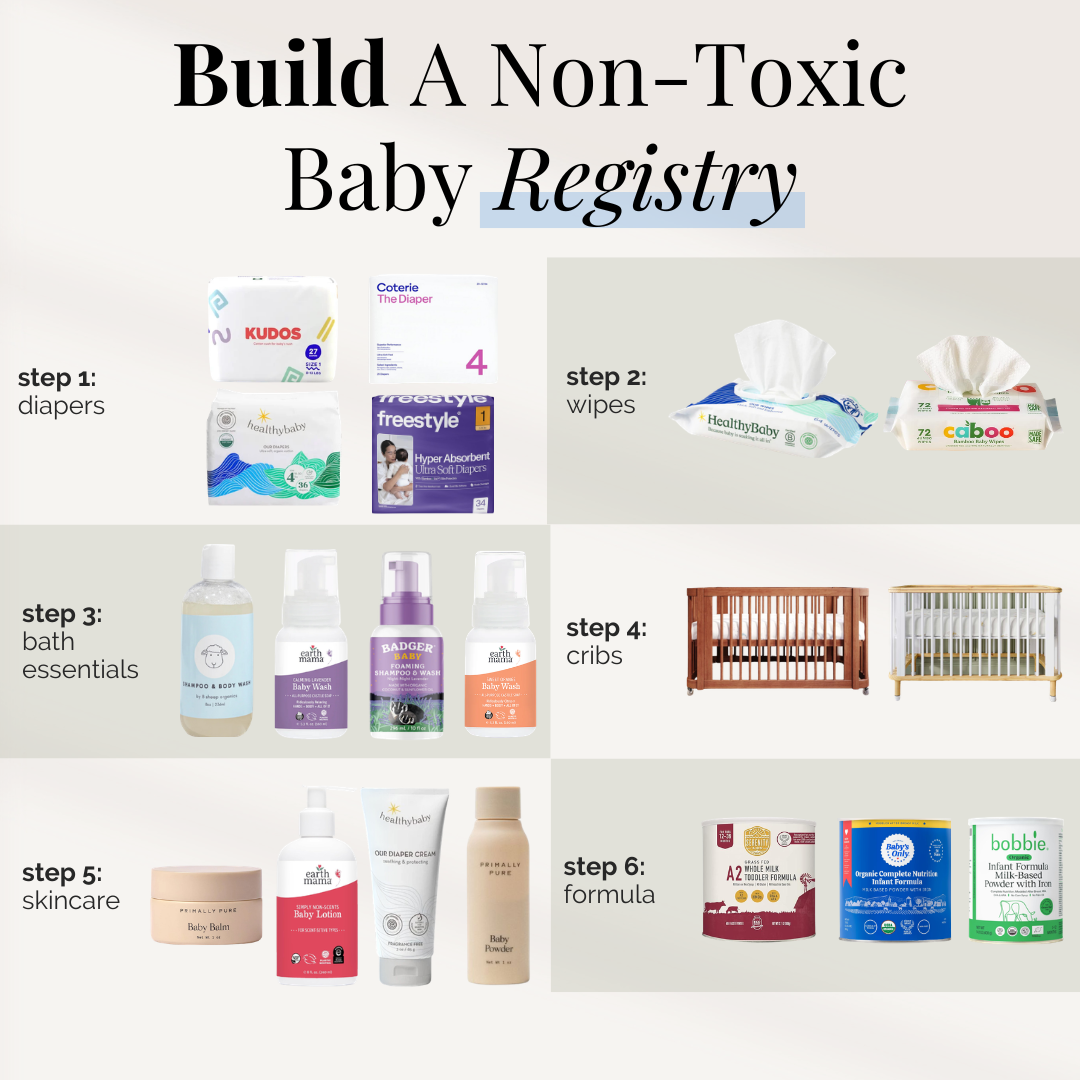
- Diapers + Wipes: The Highest-Impact Swaps
- Cribs, Mattresses + Sheets: Safer Sleep Essentials
- Formula + Prenatals: Cleaner Nutrition Support
- Step-By-Step Guide to Start Your Non-Toxic Baby + Kids Routine Today
Why Non-Toxic Baby + Kids Products Matter
Babies and kids are not just small adults. Their bodies are still developing, their detox pathways are forming, and they take in more relative exposure because of their size. Add in how frequently baby products like diapers, wipes, lotions, shampoos, detergent, and bedding is usedand you’ll see how small upgrades can make a big difference.
At Girls Who Eat, we keep this realistic. The goal is focusing on the highest-impact areas first: the products used frequently and directly on skin, like diapers, wipes, and lotions, and the items in areas they spend a lot of time, like bedding and mattresses. These are the areas where changes tend to make the biggest difference without overwhelming your life.
Most Common Toxins Found in Baby + Kids Products
The biggest red flags in baby and kids products tend to show up in a few buckets:
Fragrance or parfum is a common ingredient and can hide thousands of undisclosed chemicals, including potential allergens and phthalates.
Phenoxyethanol is a preservative found in many baby lotions and wipes and can be irritating for sensitive skin.
Petroleum and mineral oil are common in baby products marketed for moisture, but they’re low-quality ingredients and can be contaminated with impurities.
Formaldehyde-releasing preservatives are another category to watch for, including ingredients like DMDM hydantoin and quaternium-15.
Chlorine bleach is often used to whiten diapers and wipes, but it can be irritating on delicate skin.
Flame retardants can show up in mattresses and furniture (even car seats, too), and this is one of the most important additives to avoid in baby sleep environments.
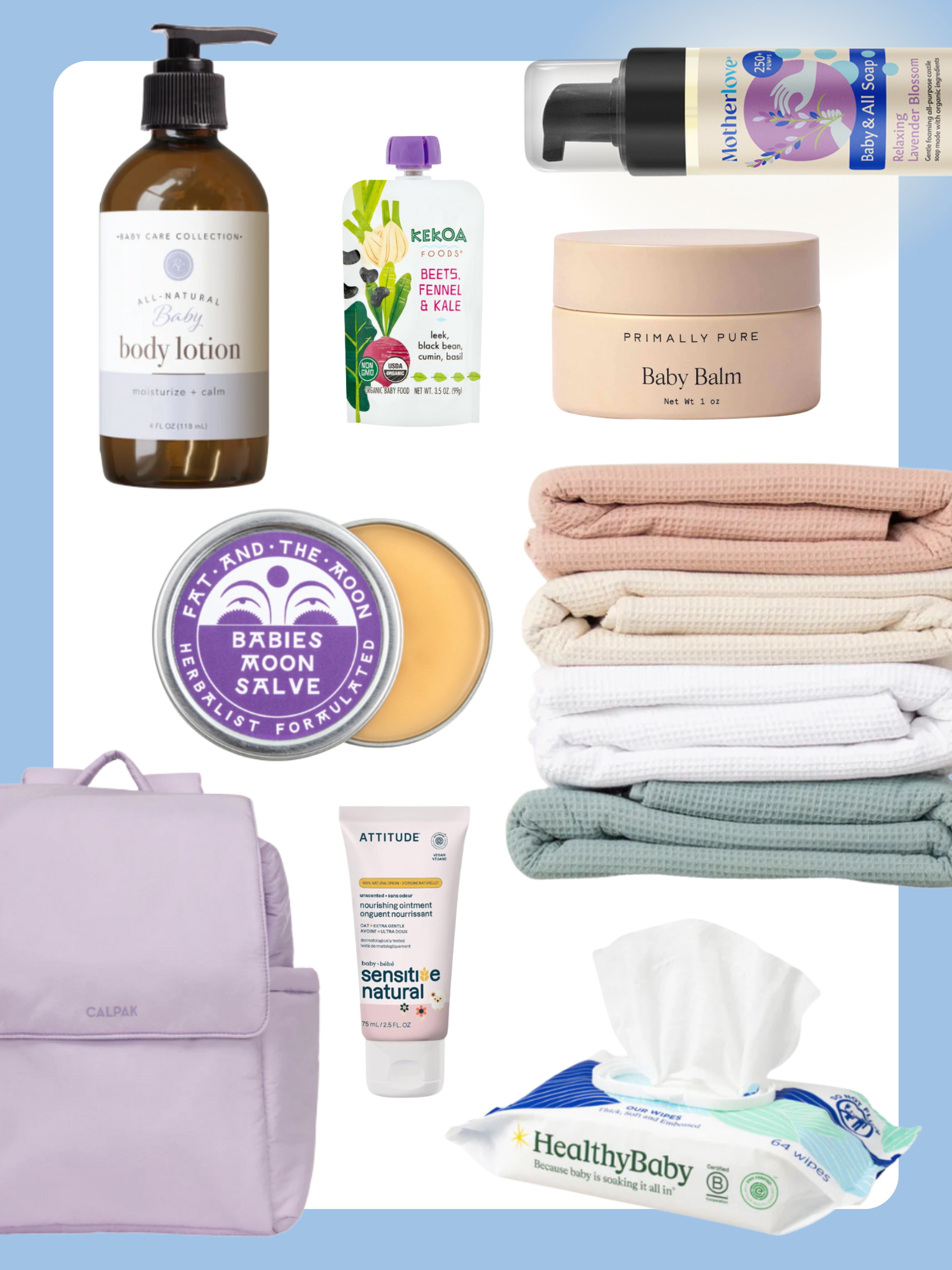
Bath + Skincare: What to Look For
Baby skin absorbs more than adult skin, which is why less is more when it comes to ingredients. Many conventional baby washes and lotions use fragrance, heavy preservatives, and petroleum-based ingredients that can irritate sensitive skin or disrupt the skin barrier.
When shopping for non-toxic baby skincare, prioritize fragrance-free, plant-based, and minimal-ingredient formulas. Tear-free or natural marketing doesn’t guarantee a clean and non-toxic formula, so always read the ingredient list. Look for products that are simple, gentle, and designed for sensitive skin without added synthetic fragrance.
Tip: Always patch-test before full use, because even non-toxic products can cause irritation on newborn skin.
Diapers + Wipes: The Highest-Impact Swaps
Diapers and wipes are some of the highest-impact swaps because they sit on delicate skin for long periods and are used frequently every single day. Some diapers contain chlorine bleaching, added fragrance, dyes, and other materials that can irritate skin and add to unnecessary toxin exposure. Wipes can contain added fragrance and preservatives that further contribute to irritation and diaper rash.
When choosing a non-toxic diaper, look for chlorine-free (or TCF), fragrance-free, and dye-free options. Breathability matters for comfort, and fewer added chemicals usually means fewer diaper-rash triggers. For wipes, look for simple formulas without fragrance, and avoid unnecessary extras like added scent or harsh preservatives.
Tip: If your baby is dealing with frequent diaper rash and irritation, consider swapping your diapers, wipes, and cream first.
Cribs, Mattresses + Sheets: Safer Sleep Essentials
Babies can spend up to 16 hours a day sleeping, so their sleep environment is one of the most important places to reduce toxins. Mattresses and cribs can off-gas VOCs, and some conventional materials may contain polyurethane foam and flame retardants, both of which are worth avoiding when possible.
When shopping for a non-toxic crib mattress and bedding, look for GOTS certified organic materials when you can, avoid polyurethane foam, and prioritize brands that clearly state that they are flame retardant-free. For cribs and furniture, look for untreated wood and certifications like GREENGUARD Gold.
Tip: Air out new mattresses and furniture for a few days before use to reduce VOCs.
Formula + Prenatals: Cleaner Nutrition Support
Nutrition plays a huge role in health for both baby and mom. If you’re choosing formula, prioritize brands with transparent ingredient lists and high-quality standards. Many parents look for organic formulas, and some prefer European-style formulas because of stricter ingredient standards.
When reading formula labels, common ingredients like corn syrup solids, palm oil, and maltodextrin can be beneficial to avoid. Especially if your baby has special dietary concerns, it can be difficult to find the perfect formula. But perfection isn’t the goal, it’s to choose the best, most transparent option that works for your baby and your situation.
For prenatals, choosing a clean, food-derived option can help support a healthy pregnancy. Many moms also continue prenatals postpartum to support recovery, hair growth, and milk production.
Tip: If you’re unsure what nutrients you need, lab work and a practitioner can help personalize supplement support, especially postpartum.
Step-by-Step Guide to Starting a Non-Toxic Baby + Kids Routine Today
The Girls Who Eat approach is simple:
- Start with the daily-use essentials. Diapers, wipes, lotion, and soap are used frequently and have the highest impact.
- Go fragrance-free first. This one change removes a major source of hidden chemicals fast.
- Upgrade their sleep environment. Focus on crib mattress and sheets, especially avoiding flame retardants and polyurethane foam when possible.
- Keep skincare minimal. Fewer ingredients is usually better for baby skin.
- Choose a cleaner formula if needed. Look for ingredient transparency and avoid common fillers like corn syrup solids, palm oil, and maltodextrin when possible.
- Replace products as you run out. No dramatic purge. Swap one category at a time.
- Swap sooner only if irritation is happening. If something causes redness, dryness, or rash, move that product to the top of your list.
- Keep it sustainable. The best non-toxic baby routine is the one you can maintain long-term while supporting your child’s comfort and health.
Even More Of Our Favorite Non-Toxic Baby + Kid Swaps
Below are more of our favorite baby and kid swaps across all categories to help you select effective non-toxic products for your routine. If you’re ever unsure about a product not in our database, use our Ingredient Glossary to better understand what it contains. We know it can feel like a lot at first, so if you’re ever feeling stressed or overwhelmed, take a step back. This guide will always be here for you to reference as you transform your family’s routine to be healthier for everyone.
Non-Toxic Crib Mattresses + Cribs
Non-Toxic Baby Skincare Products
Non-Toxic Diaper Rash Cream + Lotion
Shop our Baby + Kids Product Marketplace for all our GWE-approved favorites, from bedding and furniture to lotions and wipes.