What we’re exposed to every day has a big impact on our daily toxin load, and creating a home that feels clean and free from unnecessary chemicals can go a long way toward a healthier lifestyle. There’s no need to completely overhaul your house. Your everyday household products, furniture, and air and water quality make up a huge part of your daily exposure to toxins, so making thoughtful swaps in these areas not only reduces overwhelm, but can also result in real improvements.
The goal is simple: reduce what doesn’t serve your health, keep what does, and make upgrades that actually move the needle. Consider this your beginner-friendly, Girls Who Eat-approved guide to a non-toxic home, with a focus on the swaps with the biggest impact like what you cook with, what you sleep on, what you breathe, and what you drink.
Quick note before we get into it: you do not need to replace everything at once. Progress over perfection is the only strategy we’ve found that actually sticks, and swapping products as you run out (or upgrading the highest-impact items first) is the easiest way to make changes without waste or stress.
What We Will Cover
- Why Non-Toxic Household Swaps Matter
- Materials and Chemicals to Avoid in Household Products
- Cookware: The Highest Impact Swap
- Mattresses: Conventional vs. Non-Toxic
- Bedding: Non-Toxic Materials for Skin + Air
- Air Purifiers: What to Look For
- Water Filters: How to Choose the Right Type
- Cooking Utensils: The Safest Materials
- Step-By-Step Guide to Start Your Non-Toxic Home Upgrades Today
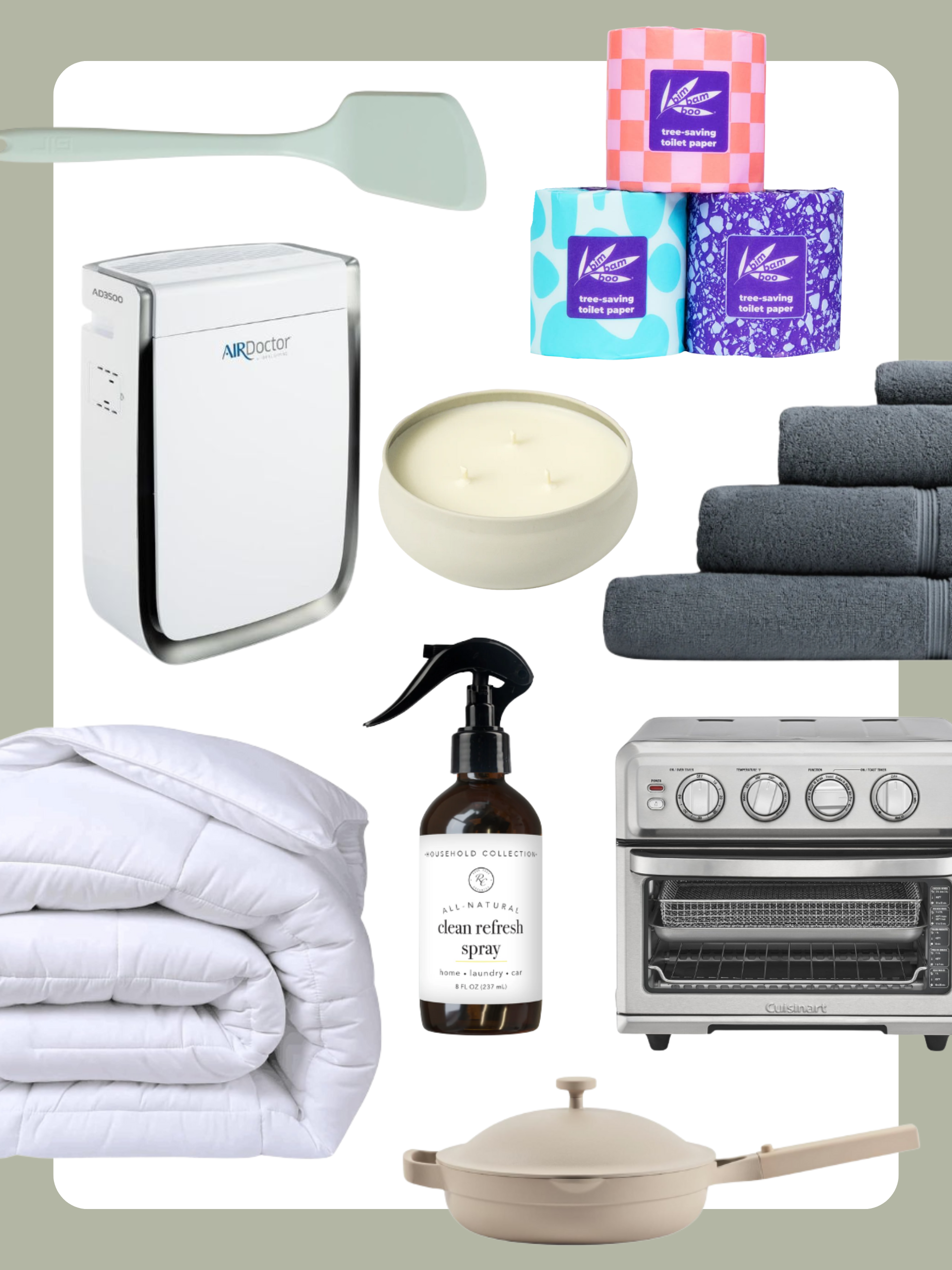
Why Non-Toxic Household Swaps Matter
Non-toxic living isn’t only about what you eat or put on your skin, it’s also about what you’re exposed to inside your own home. Materials used in cookware, mattresses, bedding, cleaning supplies, and what you breathe in from your indoor air can add up over time, especially when exposure is daily and long-term. This can result in symptoms like headaches, reactive skin, and fatigue, and can lead to more serious health issues in the long term.
You don’t need to throw out everything in your kitchen or replace every piece of furniture. The best non-toxic home is the one you can maintain without stress or overspending. That’s why we focus on the highest-impact categories first: cookware, mattress + bedding and air + water filters. The goal is upgrading what matters most for your health, not chasing perfection.
Materials and Chemicals to Avoid in Household Products
If non-toxic home shopping has ever felt confusing, you’re not alone. A big reason is that terms like “eco,” “green,” “natural,” and “non-toxic” aren’t consistently regulated. Brands can use them on packaging to sell you a product, while the actual materials tell a different story. This is why ingredient and material education is the foundation of non-toxic living and what we strive to teach at Girls Who Eat.
The biggest red flag ingredients in household products tend to fall into a few buckets:
PFAS (forever chemicals) are a major problem, especially in cookware, and are often used on nonstick coatings and for stain and water resistance.
Flame retardants can show up in mattresses and upholstered furniture, and are often used to meet flammability requirements.
Fragrance (including “odor control” treatments) is another common issue in home products, especially in bedding, laundry, and mattresses, because it can be a catch-all for undisclosed chemicals.
Vinyl/PVC can be a concern in certain household materials due to plasticizers and off-gassing.
Treated textiles often come with chemical finishes that you don’t actually need for a clean home, look for words like stain-resistant, wrinkle-resistant, and antimicrobial on the label.
The good news is you don’t need to swap everything at once. Start by prioritizing cookware and other items used for foods, then air and water quality, followed by bedding. That’s where the biggest impacts usually are.
Cookware: The Highest Impact Swap
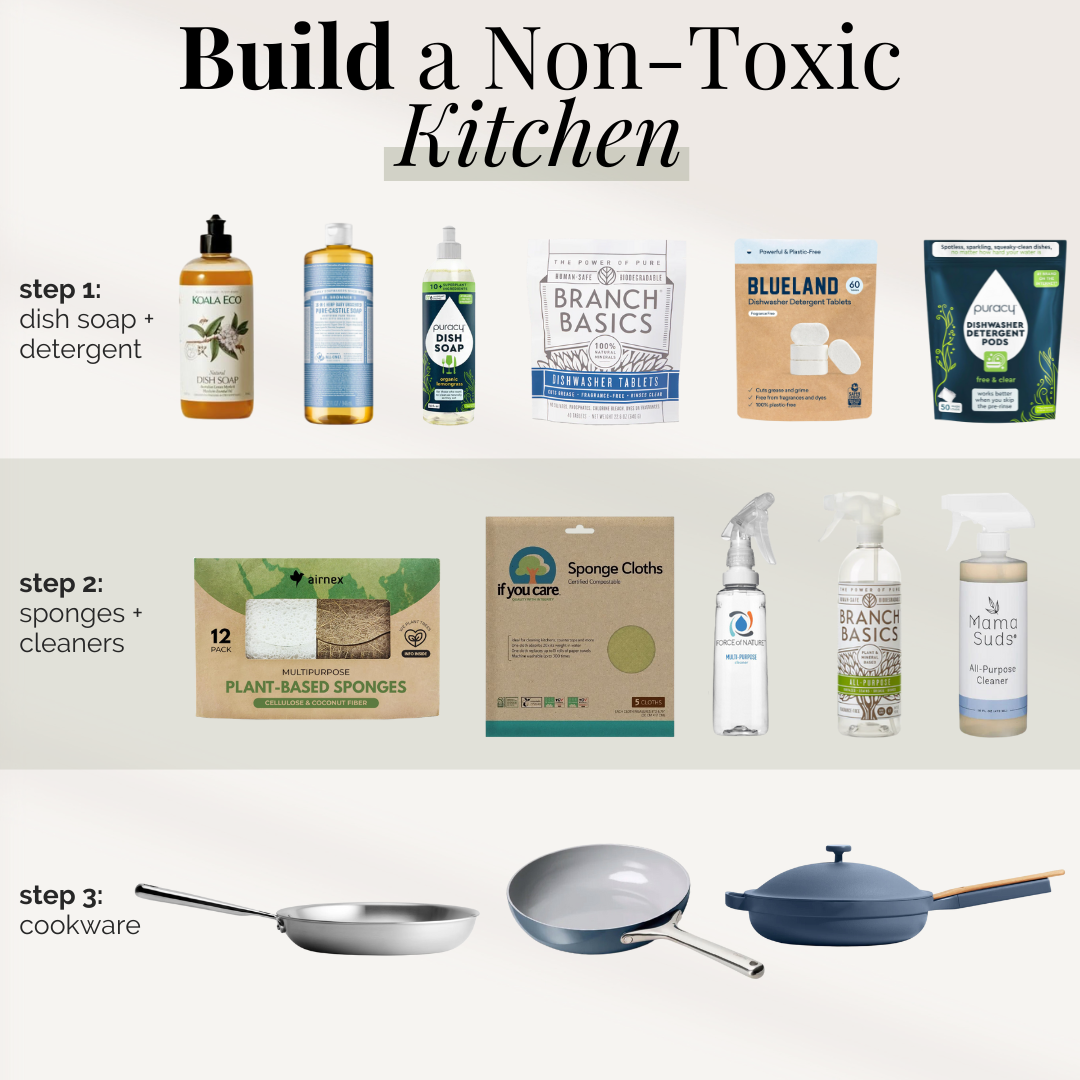
Cookware is one of the highest-impact household swaps you can make because it combines heat, repeated use, and direct food contact. Many conventional nonstick pans rely on PFAS coatings that are designed to resist sticking, but those same coatings can break down over time, especially with high heat, scratching, or wear. The goal isn’t to fear cooking, it’s to choose cookware materials that are stable, durable, and don’t rely on chemical or PFAS coatings to perform.
When choosing non-toxic cookware, focus on the base material and the cooking surface. Materials like stainless steel, cast iron, carbon steel, and certain types of enamel-coated cookware are popular in non-toxic kitchens because they’re designed for longevity and don’t depend on forever chemicals nonstick performance. Avoid any cookware that relies on questionable coatings or wears quickly because deterioration is when problems with chemical leaching into food starts to occur.
If you’re upgrading gradually, start with the pans you use most often first, and then work your way through your cookware as needed.
Mattresses: Conventional vs Non-Toxic
Your bedroom should be a sanctuary, but your mattress can quietly expose you to toxins all night long.Sleep is when your body is detoxing, and a mattress should be supportive of that process. Conventional mattresses can include chemical flame retardants, synthetic foams, adhesives, and waterproofing or stain-resistant treatments that can off-gas over time, sometimes for years, leading to VOCs in your air. Even if you don’t smell it, these gases can still contribute to your overall indoor air quality.
When you’re choosing a non-toxic mattress, the goal is simple: look for transparent materials, fewer chemical treatments, and third-party certifications that actually mean something, like GOTS, GREENGUARD Gold and OEKO-TEX. A non-toxic mattress can make a noticeable difference for people who are sensitive, prone to headaches, have reactive skin, or just want to reduce baseline exposure while they sleep. If a mattress has vague language and no material clarity, that’s usually a sign to keep looking.
If replacing your mattress isn’t realistic right now, a mattress topper and non-toxic bedding can still be important upgrades that reduce direct contact exposure.
Bedding: Non-Toxic Materials for Skin + Air
Bedding is an easier and less expensive upgrade than a mattress, and it can still make a big difference in your nightly exposure. Many conventional sheets and comforters are treated for wrinkle resistance, stain resistance, or odor control. Some people notice irritation or sensitivity from heavily treated fabrics, especially because we lay on our bedding every night, exposing our skin and face to the fabric, breathing anything it offgases.
For non-toxic bedding, focus on natural, breathable, low-treatment materials. Organic cotton is a common starting point because it’s widely available and easy to maintain. Linen and other natural fibers like bamboo can also be great options depending on your preferences. The main goal is to avoid bedding with heavy chemical finishes and hidden pesticides.
Air Purifiers: What to Look For
Indoor air quality matters because you breathe it all day when you’re home, and the entire night while you sleep. Many homes actually have more indoor air pollutants than expected (sometimes even worse than the outdoors!), especially if you live in a city, have pets, cook frequently, or deal with wildfire smoke seasonally. What you breathe affects your lung health and can be absorbed into your blood stream, so a good air purifier is one of the highest-impact home upgrades you can make, reducing even the smallest of airborne particles.
When choosing an air purifier, make sure it’s the right size for your space and that it effectively filters small particles, usually with HEPA and carbon filters. A bigger filter isn’t always better if it’s not matched to your room size and usage habits. Also pay attention to unnecessary features, like added fragrance or ozone-style claims. The goal is strong filtration, not air treatments that create new problems.
If you’re deciding where to start filtering the air, bedrooms are often the most impactful place because you spend the most uninterrupted hours there. In rooms without an air filter, opening your windows for fresh air and good ventilation can be helpful to remove indoor air pollutants..
Water Filters: How to Choose the Right Type
Water filtration is an important non-toxic home upgrade, but it’s also the most dependent on your situation. Your water source, region, and plumbing all matter when choosing how to filter your water.
First, decide whether you need a filter for drinking water only or for the whole home. Many people start with a drinking water filter because it’s the easiest to implement, and eventually add shower, faucet, or whole home filters as needed.It’s important for a water filter to transparently report the contaminants it removes and share the data to back up those claims. For example, if you’re especially focused on contaminants like PFAS, you’ll want a filter type designed for that job, and you should see that contaminant disclosed on the test report. What matters most is that your filter is maintained properly because even a great filter doesn’t help if it’s not replaced as needed.
If you’re not sure where to start, begin with a high-quality drinking water filter and build from there.
Cooking Utensils: The Safest Materials
Cooking utensils seem insignificant, but because they’re used daily and often touch hot cookware, they shouldn’t be forgotten when making kitchen swaps. Plastic is a common utensil material that can degrade over time, especially with heat, and leach microplastics and unwanted chemicals into your food.
For non-toxic cooking utensils, the goal is to choose materials that hold up well to high heat and frequent use. Solid wood, silicone, and stainless steel are the best options.
If you’re upgrading slowly, start with the utensils you use with heat most often, like spatulas or tongs, and replace worn or degraded items first.
Step-By-Step Guide to Start Your Non-Toxic Home Upgrades Today
The Girls Who Eat approach is simple:
- Start with the highest-impact categories. Begin with cookware, mattress + bedding, and air + water because those are frequent use, high impact items.
- Replace what’s worn first. Scratched nonstick pans, old plastic utensils, and heavily degraded cookware go to the top of the list.
- Focus on heat and contact. Prioritize anything that touches food under heat, like pans, and anything that directly touches your skin for long periods, like sheets.
- Choose one room to upgrade first. The kitchen and bedroom are usually the highest ROI.
- Match your budget to your swap plan. If you can only do one upgrade, start with what you use daily.
- Avoid treated features when possible. Stain-resistant, odor-control, wrinkle-resistant, and antimicrobial finishes are often where unnecessary chemicals hide.
- Replace as you run out or as needed. No dramatic purges. No wasted items.
- Keep it simple. The goal isn’t a perfect home. It’s an improved baseline that supports your health and feels realistic to maintain long term.
Even More Of Our Favorite Non-Toxic Household Swaps
Below are more of our favorite household swaps across all categories to help you select effective non-toxic products for your home. If you’re ever unsure about a product not in our database, use our Ingredient Glossary to better understand what it contains. Remember, this should be fun! If you’re ever feeling stressed or overwhelmed, take a step back. This guide will always be here for you to reference as you transform your household to be more aligned with your lifestyle goals.
Shop our Household Product Marketplace for all our GWE-approved favorites, from furniture and bedding to cookware and candles.