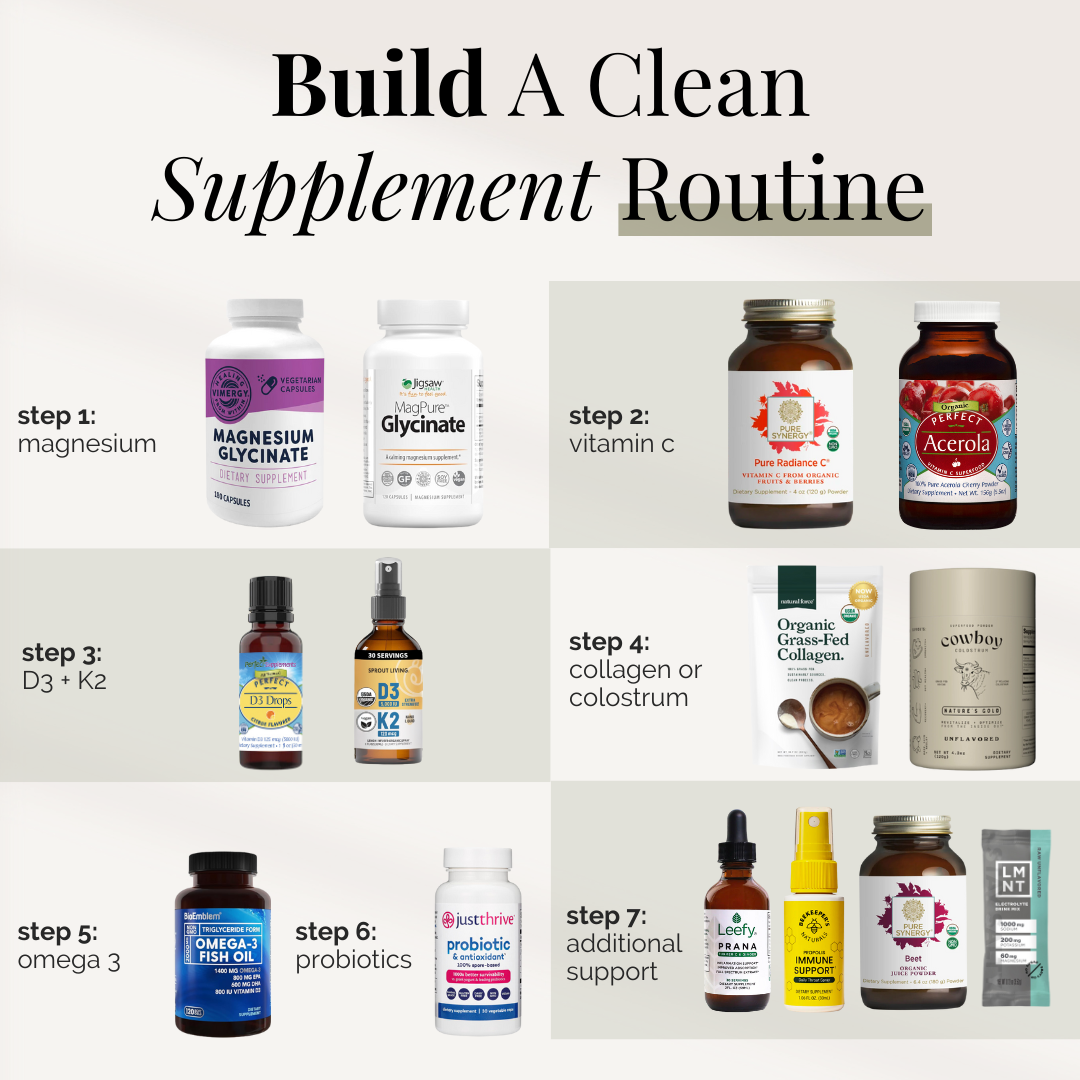
Supplements can be a smart addition to a non-toxic lifestyle, but like other categories, it’s important to pay attention to what’s actually in them. While the right supplement can be transformative and lead to benefits like a better mood, more energy, and less inflammation, the wrong one can cause digestive issues, expose you to heavy metals, or not work at all.
The goal with supplements is simple: reduce the fillers and additives that don’t serve your health, look for transparent, third-party tested brands, and choose clean supplements that work for your health goals and that you can feel good about taking long-term. Consider this your beginner-friendly, Girls Who Eat-approved guide to non-toxic supplements, from the key ingredients to avoid to what actually matters when it comes to forms, absorption, and quality.
Quick note before we get into it: you do not need to replace everything at once. Progress over perfection is the only strategy we’ve found that actually sticks, and swapping products as you run out is one of the easiest ways to make changes without waste or stress.
What We Will Cover
- Why Non-Toxic Supplements Matter
- Key Ingredients to Avoid in Supplements
- Letter Vitamins: The Foundation for Whole Body Support
- Magnesium: The Mineral Most People Are Missing
- Omega-3s: The Anti-Inflammatory Powerhouse
- Electrolytes: Hydration Without the Junk
- Probiotics: Supporting Gut Health + the Microbiome
- Protein Powders: Watch for Unnecessary Additives
- Collagen, Colostrum + Creatine: What to Look For
- Step-By-Step Guide to Start Your Non-Toxic Supplement Routine Today
Why Non-Toxic Supplements Matter
Supplements can be helpful to meet nutritional demands and boost wellness, but they’re also one of the most confusing corners of wellness. There are so many options, new trends pop up constantly, and some products don’t work as promised because they are underdosed or use ingredients with low bioavailability. Others have unnecessary ingredients like dyes, sweeteners, and flavors that don’t support a healthy, non-toxic lifestyle.
At Girls Who Eat, our approach is low-lift and realistic. You don’t need a giant supplement stack to be healthy. The best supplement routine is the one your body actually needs and that you can maintain without stress, overspending, or feeling like you’re doing it wrong. That’s why we recommend focusing on the highest-impact staples first: the supplements that fill common nutrient gaps, support modern stress and recovery, and are easy to find in clean, bioavailable forms (once you know what to look for).
Key Ingredients to Avoid in Supplements
If non-toxic supplements have ever felt confusing, you’re not alone. A big reason is that terms like “clean,” “natural,” “doctor formulated,” and “wellness” aren’t regulated in a way that guarantees a clean formula. Brands can use non-toxic-oriented buzzwords on the front label even when the ingredient list says something else. This is why ingredient education is the foundation of non-toxic living and what we do at Girls Who Eat. The front label is marketing, but the Supplement Facts panel and Other Ingredients on the label tell the truth.
The most common red flags in supplements tend to fall into a few buckets:
- Artificial dyes + colorants (especially in gummies/capsules) — added for appearance only
- Added sugars, sugar alcohols, + artificial sweeteners (common in drink mixes, flavored powders, gummies) — can be rough on digestion for some people and include hidden sugars
- Natural flavors or flavors — umbrella terms that can hide a long list of additives and chemical ingredients
You’ll also see a lot of gums, thickeners, and emulsifiers used to improve texture and mixability in powders and liquids, but these can cause gut discomfort and inflammation. Keep an eye out for proprietary blends that don’t disclose exact amounts, because if you don’t know the dose, it’s hard to know if what you’re actually taking is enough to provide a benefit and whether it’s worth your money.
The good news is you don’t need to become a chemist to shop smarter. A quick scan is usually enough. Start by checking Other Ingredients for dyes, sweeteners, flavors, gums, and proprietary blends, then build from there.
Letter Vitamins: The Foundation for Whole-Body Support
When it comes to baseline health, vitamins A, B, C, D, E, and K play key roles in immune support, energy, hormone balance, and skin health. But the form matters, and this is where a lot of products fall short. When it comes to foundational supplements, keep it simple. Choose bioavailable forms, and avoid formulas padded with fillers.
A few form callouts that matter most:
- Vitamin A: Look for preformed vitamin A (often listed as retinyl palmitate or retinyl acetate).
- B Vitamins: Many people do best with methylated forms, think methylfolate (B9) and methylcobalamin (B12).
- Vitamin C: Whole-food sources like acerola or camu camu are often used for additional antioxidant support.
- Vitamin D: Choose D3 (not D2) and pair it with K2, ideally MK-7.
- Vitamin E: Look for mixed tocopherols and tocotrienols for broader antioxidant coverage.
- Vitamin K2: MK-7 is typically the most recommended form for bioavailability.
Tip: Blood work can be one of the smartest tools you invest in. It helps you personalize your stack instead of guessing, especially for vitamin and iron-related markers so you can supplement smarter.
Magnesium: The Mineral Most People Are Missing
Magnesium helps with hundreds of processes in the body, including sleep, stress response, muscle recovery, and blood sugar regulation, which is why it’s one of the most foundational supplements for modern life. Not all magnesium is created equal, and choosing the right form makes a big difference in your results.
The different formats of magnesium include:
- Magnesium glycinate is one of the most popular choices for relaxation and sleep because it’s gentle and well-tolerated.
- Magnesium threonate is known for brain support because it’s known as a form that can cross the blood-brain barrier.
- Magnesium taurate is commonly chosen for cardiovascular support.
- Magnesium malate is often used for fatigue and recovery.
- Magnesium chloride is popular in topical sprays and gels for muscle tension.
Tip: We generally avoid magnesium oxide because it’s poorly absorbed. Magnesium citrate can be useful, but it’s often better treated as an occasional digestive support option rather than a daily foundational form.
Omega-3s: The Anti-Inflammatory Powerhouse
Omega-3s (EPA and DHA) are key for brain function, heart health, and inflammation balance, yet many people don’t get enough through food alone. If you don’t eat fatty fish a few times per week, omega-3s can be a smart foundational addition. If you don’t consume fish, algal oil is a good vegan alternative. When you’re choosing an omega-3 supplement, look for triglyceride or phospholipid forms, which are commonly discussed as being better absorbed than ethyl ester forms. Quality control matters a lot in this category, so third-party testing for purity and freshness is important..
Electrolytes: Hydration Without the Junk
Electrolytes can be a game changer for hydration and energy, but most mainstream options are loaded with sugar, dyes, and natural flavors. If you’re adding electrolytes, the goal is to support hydration, not turn your water into a candy-flavored drink mix.
A clean electrolyte formula typically includes real sodium (often from sea salt), potassium (commonly potassium citrate), magnesium, and sometimes trace minerals, without heavy sweeteners, gums, and artificial flavor systems. Using electrolytesis especially helpful if you drink filtered water and want to replenish any missing minerals.
Probiotics: Supporting Gut Health + the Microbiome
Probiotics are beneficial bacteria that help restore balance in your gut microbiome, which is why they’re often one of the most researched gut health supplements. They can support digestion, immune function, and even mood, but this is another category where quality varies a lot. If you’re investing in a daily probiotic, the goal is a clean formula that actually survives the journey to your gut. Many probiotic supplements look appealing from the front label but hide unnecessary additives in the ingredient list.
When you’re choosing a probiotic supplement, look for transparency first with clearly listed strains. We avoid probiotics with added sugars, artificial flavors, and gums, since those ingredients can cause digestion problems for some people and don’t belong in something meant to support gut balance. We also personally avoid refrigerated options, because it’s hard to trust that a probiotic that can’t be stored at room temperature will survive the journey through your body.
If you’re searching for the best probiotic for gut health, a spore-based probiotic or shelf-stable probiotic can be a great starting point, especially if you’ve tried probiotics before without noticing a difference. In general, we prefer spore-based probiotics because they’re designed to survive stomach acid more effectively than many traditional strains. The main goal is consistency: a high-quality probiotic taken regularly in a clean capsule format is often more impactful than hopping between trendy formulas.
Tip: Take your probiotic after your largest meal to help the bacteria survive stomach acid.
Protein Powders: Watch for Unnecessary Additives
Protein is essential for muscle recovery, metabolism, and hormone support, but protein powder is one of the biggest offenders of unwanted ingredients. Many are basically dessert-flavored powders held together with sweeteners, gums, and flavor blends that can disrupt your gut.
When shopping for a cleaner protein powder, look for straightforward sourcing and minimal add-ons. Many people prefer grass-fed whey or unflavored animal-based proteins without gums. If you choose plant-based protein, look for blends with pea, hemp, and brown rice that are organic and third-party tested when possible. Heavy metals testing is important in this category, especially if you plan to consume protein powder daily.
Tip: If protein powder upsets your stomach, start with half a scoop or try simpler formulas with fewer ingredients.
Collagen, Colostrum + Creatine: What to Look For
Collagen, colostrum, and creatine are trending everywhere right now, and when taken regularly, they can be powerful additions to your wellness routine. The catch is that they’re also categories where brands love to add flavors, sweeteners, and performance blends that aren’t necessary. The key is choosing clean, single-purpose formulas that actually support your health without the extra junk.
Collagen is most often used for supporting skin elasticity, hair and nail strength, joints, and gut lining support. Because collagen is a protein, quality and sourcing matter. The biggest red flags tend to be artificial flavors or sweeteners, gums and fillers, vague sourcing, and a lack of third-party testing for contaminants like heavy metals. Look for clearly labeled sourcing (often grass-fed/pasture-raised bovine), hydrolyzed collagen peptides, and transparent testing so you know what’s actually in your supplement.
Colostrum is often used for gut barrier support, digestion, immune support, and inflammation balance, which is why it’s especially popular with anyone focused on gut health. Since it’s an animal-derived product, sourcing and transparency are key. Look for grass-fed bovine sourcing, minimal ingredients, and third-party testing for quality. If you’re sensitive to dairy, look for casein-free options. Avoid formulas padded with flavors, gums, or filler blends that can make a gut-support supplement harder to tolerate.
Creatine isn’t just for athletes. It supports strength, muscle recovery, energy production, and even brain function and cognitive performance because it plays a role in cellular energy. It can be helpful for boosting workouts, lessening fatigue, and overall performance.. The cleanest option is typically single-ingredient creatine monohydrate with third-party testing. Taking it consistently matters more than buying fancy blends, and simple formulas are usually the most effective.
Step-By-Step Guide to Start Your Non-Toxic Supplement Routine Today
The Girls Who Eat approach is simple.
- Start with your daily staples. Focus on what you take consistently, because those upgrades give you the biggest impact fastest.
- Flip the bottle and read the Other Ingredients label. That’s where dyes, flavors, sweeteners, and gums usually live.
- Prioritize bioavailable forms. Especially for vitamin D (D3), K2 (MK-7), B vitamins (methylated forms), and magnesium (skip oxide).
- Be extra picky with your supplements. Electrolytes and protein powders are the most likely to hide flavor systems and additives.
- Avoid proprietary blends when possible. If you can’t see exact doses, you can’t fairly evaluate the product.
- Test, don’t guess. Blood work helps you personalize your plan and avoid wasting money on supplements you don’t need.
- Replace products as you run out. No dramatic purges. No wasted half-used bottles. Upgrade one at a time.
- Keep it sustainable. The goal isn’t a massive supplement stack, it’s a supportive routine that fits your real life and actually moves the needle.
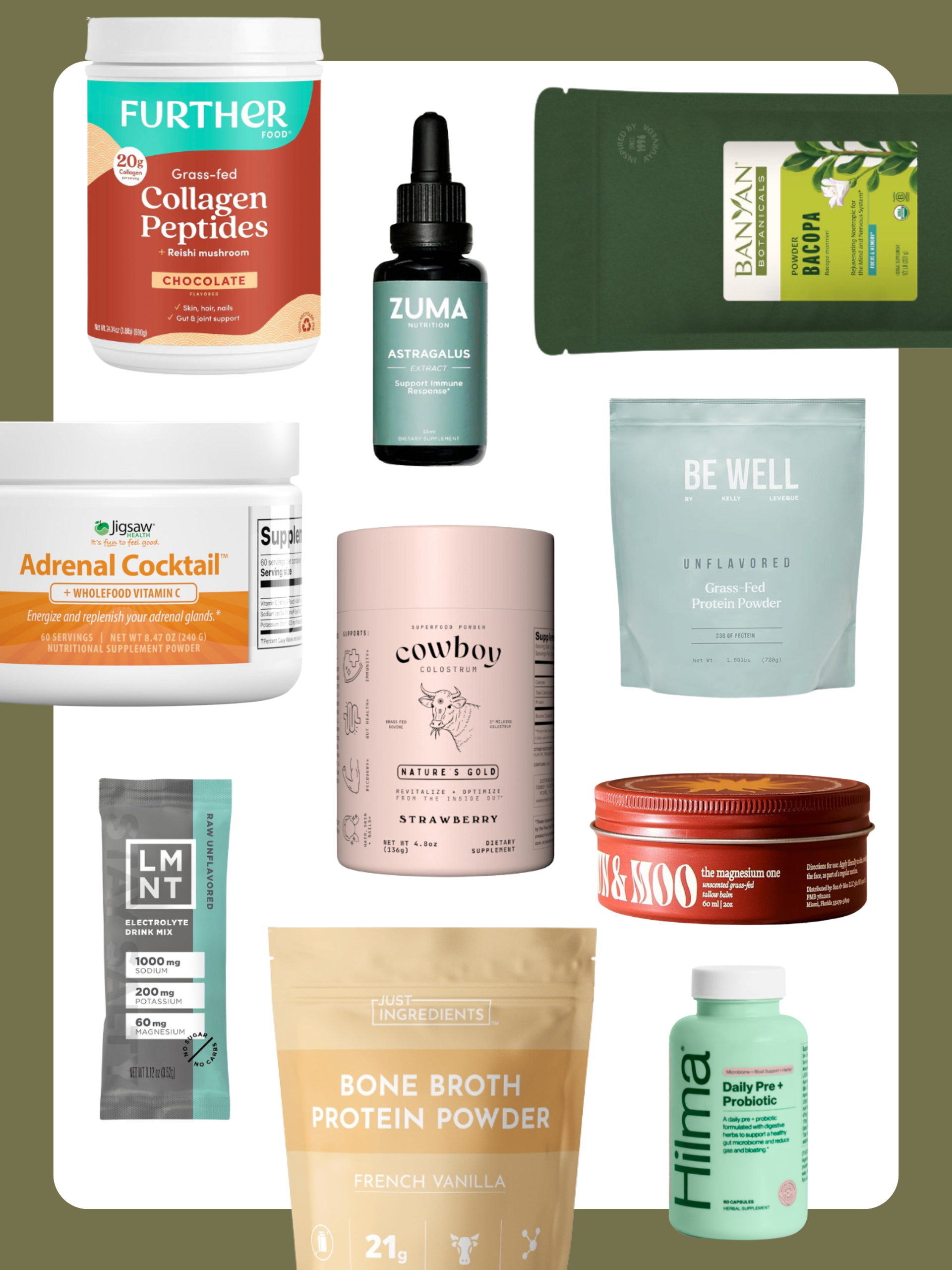
Even More Of Our Favorite Clean Supplement Swaps
Below are more of our favorite supplements swaps across all categories to help you select effective and clean products for your routine. If you’re ever unsure about a product not in our database, use our Ingredient Glossary to better understand what it contains. Remember, this should be fun! If you’re ever feeling stressed or overwhelmed, take a step back. This guide will always be here for you to reference as you transform your supplement routine to be more personalized, effective, and streamlined.
Shop our Supplement Product Marketplace for all our GWE-approved favorites, from protein and creatine to probiotics and vitamin D.