When you decide to start a non-toxic journey, taking a closer look at your beauty products is an impactful step, but it can also be overwhelming. Sorting through the long list of ingredients across your skincare, makeup, hair, and body products can make it feel like you’re back in chemistry class, but it doesn’t have to be complicated.
The goal is simple: reduce the ingredients that don’t serve your health, keep the products that do, and build a routine that feels good to use every day. We put together this guide to help lead you through the process so you can start decreasing the amount of toxins you’re putting on your body right away, no overwhelm needed. Consider this your beginner-friendly, Girls Who Eat-approved guide to non-toxic beauty, from the key ingredients to avoid to the swaps that make the biggest difference.
Quick note before we get into it: you do not need to replace everything at once. Progress over perfection is the only strategy we have found that actually sticks, and swapping products as you run out is one of the easiest ways to make changes without waste or stress.
What We Will Cover
- Why Non-Toxic Beauty Matters
- Key Ingredients to Avoid in Beauty Products
- Skincare: Build a Solid Foundation
- Makeup: Non-Toxic Glam Without Compromise
- Haircare + Body: Don’t Overlook These
- Step-by-Step Guide to to Starting Your Non-Toxic Beauty Journey Today
- Our Favorite Non-Toxic Beauty Swaps
Why Non-Toxic Beauty Matters
Non-toxic beauty matters for the same reason clean eating matters because what you’re exposed to every day adds up. It’s not about fear, and it’s not about perfection. It’s about patterns. Most people aren’t using one product once in a while, they’re using multiple products every day, sometimes for years. Many of those products contain red-flag ingredients like fragrance, synthetic preservatives, and petroleum-based fillers. In fact, on average women apply 100 different chemicals on their bodies a day! Over time, that cumulative exposure can show up in sneaky ways, like skin irritation and sensitivity, breakouts, headaches, hormone-related symptoms, or simply feeling off in your body.
At Girls Who Eat, our approach is low-lift and realistic. You do not need to throw out your makeup bag or replace every bottle in your shower. The best non-toxic beauty routine is the one you can maintain without stress, overspending, or feeling like you’re doing it wrong. That’s why we recommend that each individual person focuses on your own highest-impact swaps first, meaning products you use daily, keep on your skin for hours, or apply to more sensitive areas like underarms, scalp, lips, and around the eyes. The goal is upgrading while selecting better options for your health, not sacrificing or removing anything. Non-toxic beauty should feel like self-care, not like another chore.
Looking for more? Read our Q+A on Non-Toxic Beauty + Hair with our founder, Jamie.
Key Ingredients to Avoid in Beauty Products
If non-toxic beauty has ever felt confusing, you’re not alone. A big reason is that terms like “clean,” “green,” and “natural” aren’t regulated. Brands can use them on packaging even when the ingredient list tells a completely different story. This is why ingredient education is the foundation of non-toxic living, and what we strive to teach at Girls Who Eat. Remember, the front label is marketing, but when you flip over that bottle the ingredient list tells the truth.
The most common red flags in popular beauty products tend to fall into a few buckets:
Fragrance is a big one because “fragrance” or “parfum” can represent thousands of undisclosed chemicals and is often linked to irritation and hormone disruption.
PFAS, known as forever chemicals, are usually found in long-wear or water-resistant products and can stay in your body for years.
Parabens and phthalates are often flagged due to endocrine disruption concerns.
Phenoxyethanol is another common preservative found in everything from serums to baby wipes, and it can be irritating for some people.
PEGs (polyethylene glycols) are petroleum-derived and used to soften and texture products, and they can come with contamination concerns and may mistakenly increase absorption of other ingredients.
BHT is a preservative that’s often flagged due to endocrine and long-term exposure concerns.
Formaldehyde-releasing preservatives can show up in personal care and are worth avoiding but won’t be listed on the label, so they’re important to learn about, especially if you have sensitive skin.
The good news is you don’t need to become a chemist to shop smarter. A quick scan is usually enough. Start by looking for fragrance or parfum first, then scan for the bigger red-flag categories you’re avoiding. If you’re just beginning, pick one or two ingredients to focus on and build from there (any ingredients from the list above is a good place to start!).
Skincare: Build a Solid Foundation
For most people, skincare is the easiest and most impactful place to start as it’s applied directly to bare skin, sometimes in large quantities (like body lotion!), and stays on your skin until you clean it off. It’s also where people tend to layer products, which increases the chance of irritation when formulas are heavily fragranced or preservative-heavy.
The best skincare categories to start with depend on which you use most often, but we recommend taking a closer look at your cleanser, serum, moisturizer, and sunscreen.
Cleanser touches your skin daily and sets the stage for everything else.
Serums can be powerful, but they’re also where ingredient lists get complicated, so reading the label and knowing what you’re putting on your skin is helpful.
Moisturizer is a great swap because it supports your skin barrier, and the right moisturizer can reduce the need for multiple other products (and therefore reduce your total toxin load).
Sunscreen is one of the most important categories to get right because it’s applied to large areas and used consistently, and many conventional sunscreens contain ingredients that are known carcinogens.
When shopping for non-toxic skincare, we recommend looking for plant oils, barrier-supporting ingredients, and gentle actives, like bakuchiol, that make sense for your skin type. A simpler routine is often more effective than using several products at once, especially if your skin is reactive. Non-toxic skincare should feel supportive, not stripping, and it should never need heavy fragrance to feel luxurious.
Makeup: Non-Toxic Glam Without Compromise
One of the biggest myths in the non-toxic space is that non-toxic makeup can’t perform. Non-toxic makeup can work just as well (if not better!) than conventional formulas, but it may take some time to find the right products for you. The goal isn’t to downgrade your routine, but instead to elevate it by finding formulas that deliver while avoiding ingredients that are irritating or a potential health risk.
When prioritizing swaps, foundation or concealer is a smart place to begin because they cover a large area of skin and are worn for long hours. Mascara is another high-impact swap because it sits close to the eyes, a vulnerable area. Lip products matter because they’re one of the few categories where you may unintentionally ingest the product.
One key area to pay attention to when choosing makeup is how they are coloring the product. Oxides are a safer alternative, while coal tar synthetic dyes can irritate skin, disrupt hormones, and even be a neurotoxin. Check the ingredient label closely on powders and aerosols, especially for added fragrance and titanium dioxide, because inhalation is part of the exposure pathway.
Transitioning to non-toxic makeup doesn’t need to feel stressful. The most sustainable approach is to replace products as they run out, starting with what you reach for most. Keep what you love, upgrade what you use daily, and expect a little trial and error before you find your perfect match.
Haircare and Body: Don’t Overlook These
Haircare and body products are often overlooked when making non-toxic swaps, but they’re some of the most fragrance-heavy categories in the entire routine which is why it shouldn’t be skipped. Shampoo, conditioner, styling products, body lotion, and deodorant are typically used daily, and many conventional options rely on fragrance, harsh surfactants, and preservatives that can irritate skin and disrupt your skin barrier.
Shampoo and conditioner matter because your scalp is four times more absorbent than your skin. Your scalp can be surprisingly sensitive, made worse by the number of products applied there regularly. Styling products deserve special attention because sprays and aerosols can be easily inhaled and then absorbed into the bloodstream. Body lotion is applied over large areas of our skin (our largest organ!), often right after showering when pores are open and products are more easily absorbed into the skin. Deodorant is used daily on the thin, delicate skin near lymph nodes, which is why it’s one of our most emphasized high-impact swaps.
What to look for instead is straightforward: scalp-friendly, hormone-conscious formulas that avoid heavy fragrance and don’t rely on harsh detergents to clean. There are plenty of swaps that feel elevated and luxurious, with great textures, ingredient transparency and made with ingredients that are actually better for your health and skin.
Step-by-Step Guide to Starting Your Non-Toxic Beauty Journey Today
The Girls Who Eat approach is simple:
- Start with your most used products. Begin with what you reach for every single day,those swaps create the biggest impact, fast.
- Prioritize what stays on your skin the longest. Think moisturizer, deodorant, sunscreen, foundation, and body lotion. These sit directly on your skin for hours.
- Focus on sensitive areas first. Upgrade anything used on your underarms, scalp, lips, and around the eyes, since these areas tend to absorb more product and be more reactive.
- Choose your top two categories. Pick two to tackle first, like deodorant + moisturizer or shampoo + sunscreen, so you don’t feel overwhelmed.
- Match your budget to your swap plan. If you’re on a budget, start with staples you use most, and wait to replace products until they run out (step number 6!). If you can invest, prioritize products that cover the most surface area or create the most repeated exposure.
- Replace products as you run out. No dramatic purges. No wasted, half-used bottles. Swap one product at a time as you finish what you already use.
- Swap sooner only if something is irritating you. If a product is causing redness, itching, breakouts, or burning, move that category to the top of your list.
- Keep it sustainable. Non-toxic beauty works best when it fits into your real life. The goal isn’t a perfect cabinet. It’s a routine you’ll actually stick to, with products that support your skin and make you feel confident every day.
Even More Of Our Favorite Non-Toxic Beauty Swaps
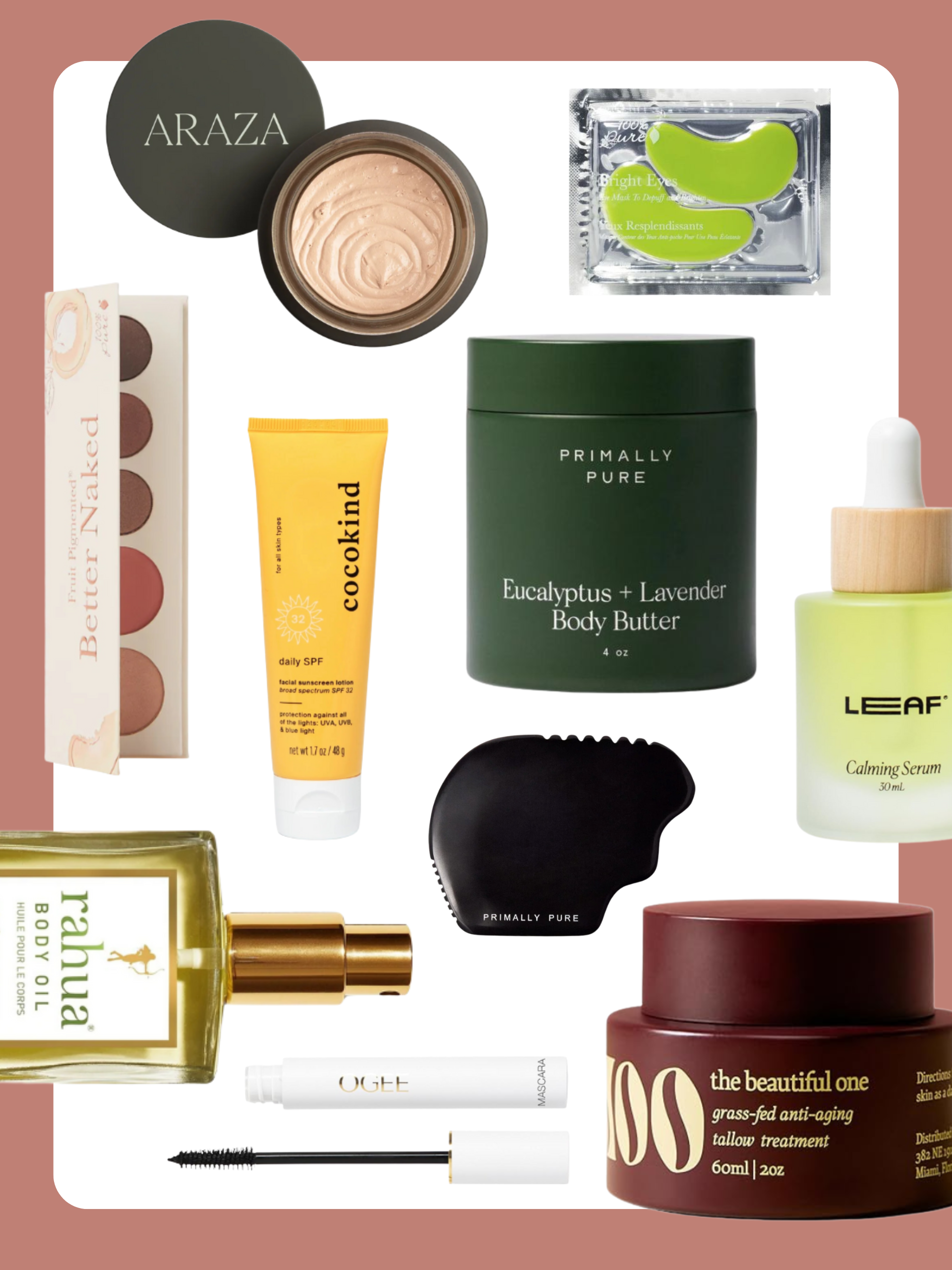
Below are more of our favorite beauty swaps across all categories to help you select effective non-toxic products for your routine. If you’re ever unsure about a product not in our database, use our Ingredient Glossary to better understand what it contains. Remember, this should be fun! If you’re ever feeling stressed or overwhelmed, take a step back. This guide will always be here for you to reference as you transform your beauty routine to be safer, healthier, and more intentional.
Shop our Beauty Product Marketplace for all our GWE-approved favorites, from cleanser and moisturizer to makeup and deodorant.